
Bicester in the Second World War: Airfields, Evacuees and Home Front
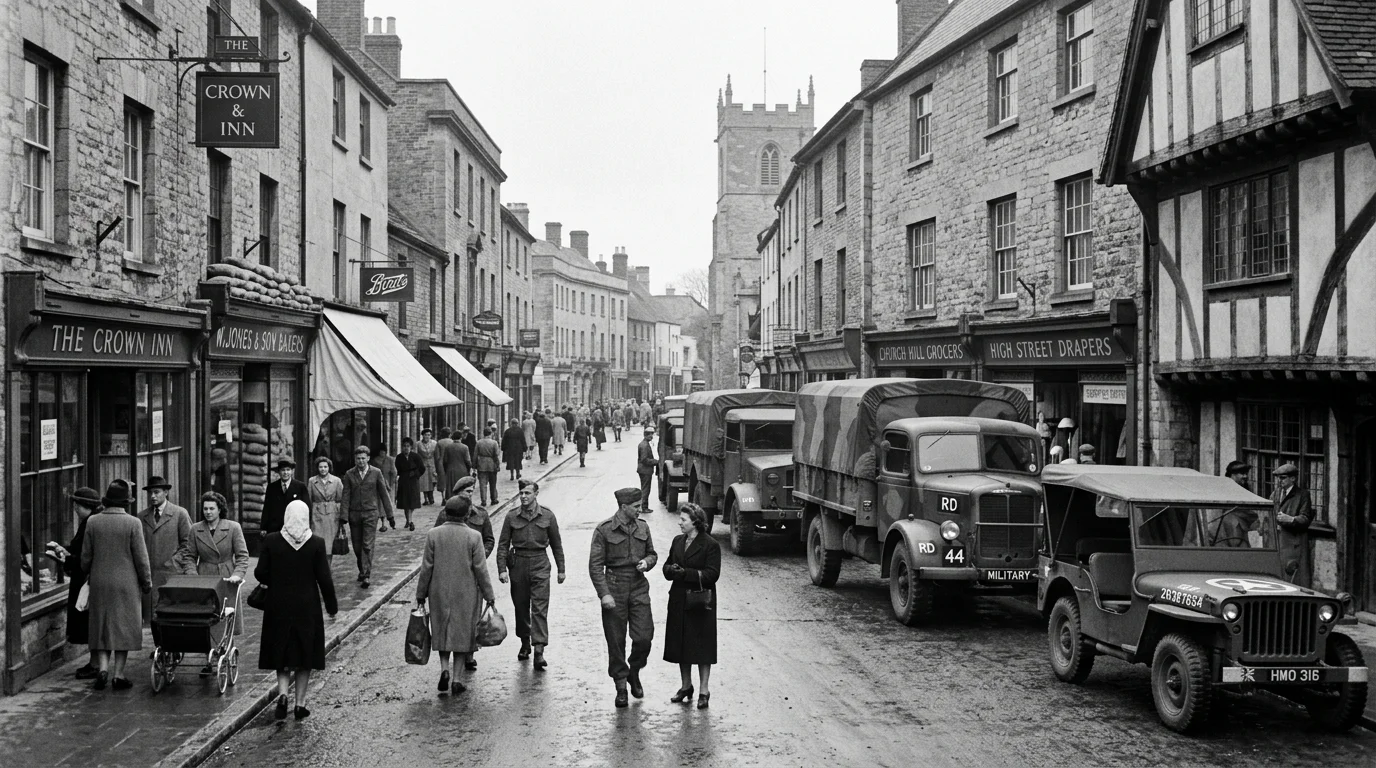
When you arrive at Bicester North Station today, you step onto platforms that welcomed thousands of displaced London school children during September 1939. Walking through Market Square or down Sheep Street, your eyes might catch vintage brick structures and quiet suburban avenues that once bustled with wartime military personnel. Between 1939 and 1945, this quiet North Oxfordshire market town transformed into an indispensable logistics stronghold for the Allied cause. Understanding Bicester WW2 history gives you a fresh appreciation for the buildings you pass every single day. The wartime story of Bicester connects local domestic courage directly to global military operations.
TL;DR: Bicester WW2 History
- What this post covers: The full narrative of Bicester WW2 history, from London evacuees and home front rationing to military supply hubs and bomber crew training.
- Why it matters to Bicester residents now: Wartime developments established major infrastructure and housing sites that still define modern neighbourhoods like Graven Hill and Bicester Motion.
- The key highlight or finding: The Central Ordnance Depot built at Graven Hill in 1942 employed 24,000 workers and stored crucial munitions for the D-Day invasion.
- What practical information they will get: Specific historical locations, exact dates, evacuee reception details, and visible wartime structures across town.
- A single immediate action they can take: Visit the preserved interwar airfield perimeter off Buckingham Road to inspect authentic 1930s military architecture.
How Did London Evacuees Reshape Wartime Life Across Bicester?
On Friday 1 September 1939, two days before Great Britain declared war on Germany, Operation Pied Piper commenced across the United Kingdom. Steam trains pulled into Bicester North Station carrying hundreds of city children who had been separated from their parents in London. Local billeting officers met the incoming families on the platform and guided them down the street to Crockwell School on East Street. On that single day, volunteers registered 107 children, 12 adults, and 21 accompanying relatives before assigning them to host households across the parish.
Twenty-four hours later, a second wave brought 600 mothers with toddlers into town. Over the subsequent six years of conflict, Bicester accommodated more than 4,000 evacuees. Local residents opened their doors, shared tight food rations, and welcomed young guests into household routines. Among those young city arrivals was future comic actor Kenneth Williams, who spent several months billeted with local veterinary surgeon Mr Chisholm in a house along Sheep Street. If you take a stroll along Sheep Street today, you can imagine shopfronts displaying blackout notices while young evacuees adjusted to rural Oxfordshire life.
Local schools operated double shifts to cope with doubled student numbers. Bicester children attended classes in the morning, while London pupils used classrooms during the afternoon. Assemblies took place in parish halls, and community groups organised weekend sports matches in Garth Park to build friendships between local youngsters and city arrivals. These emergency social arrangements created lifelong bonds between London families and North Oxfordshire households.
| Event / Location | Date / Scale | Historical Significance |
|---|---|---|
| First Evacuee Arrival | 1 September 1939 | Bicester North Station received 140 London evacuees |
| Crockwell School Reception | 1939–1945 | Primary processing station on East Street |
| Total Evacuees Billeted | Over 4,000 individuals | Town population expanded rapidly during wartime |
| King George VI Royal Visit | July 1940 | Inspected bomber crews and air defence units |
| COD Graven Hill Construction | Started 1941, opened 1942 | World War II military supply and railway depot |
| Blackthorn Prisoner Camp | 1942–1947 | Housed German and Italian prisoners of war |
What Strategic Role Did RAF Bicester and COD Bicester Play in WWII?
Military aviation had already established roots in North Oxfordshire prior to 1939, but WWII Bicester brought unprecedented operational activity. RAF Bicester served as the primary base for No. 13 Operational Training Unit under RAF Bomber Command. Aircrews trained intensively on Bristol Blenheim twin-engine light bombers, practising night navigation, formation flying, and bomb aiming over surrounding farmland. Pilots, wireless operators, and air gunners formed tight crews here before transferring to front-line squadrons across Britain.
In July 1940, King George VI travelled to Bicester aerodrome to inspect personnel and review readiness following the evacuation from Dunkirk. The airfield maintained a constant schedule of sorties and trials throughout the conflict. Because the perimeter retained grass runways rather than concrete strips, the site avoided target identification as a heavy bomber station. If you want to explore how these historic hangars survived into the 21st century, read our comprehensive guide to RAF Bicester bomber station history.
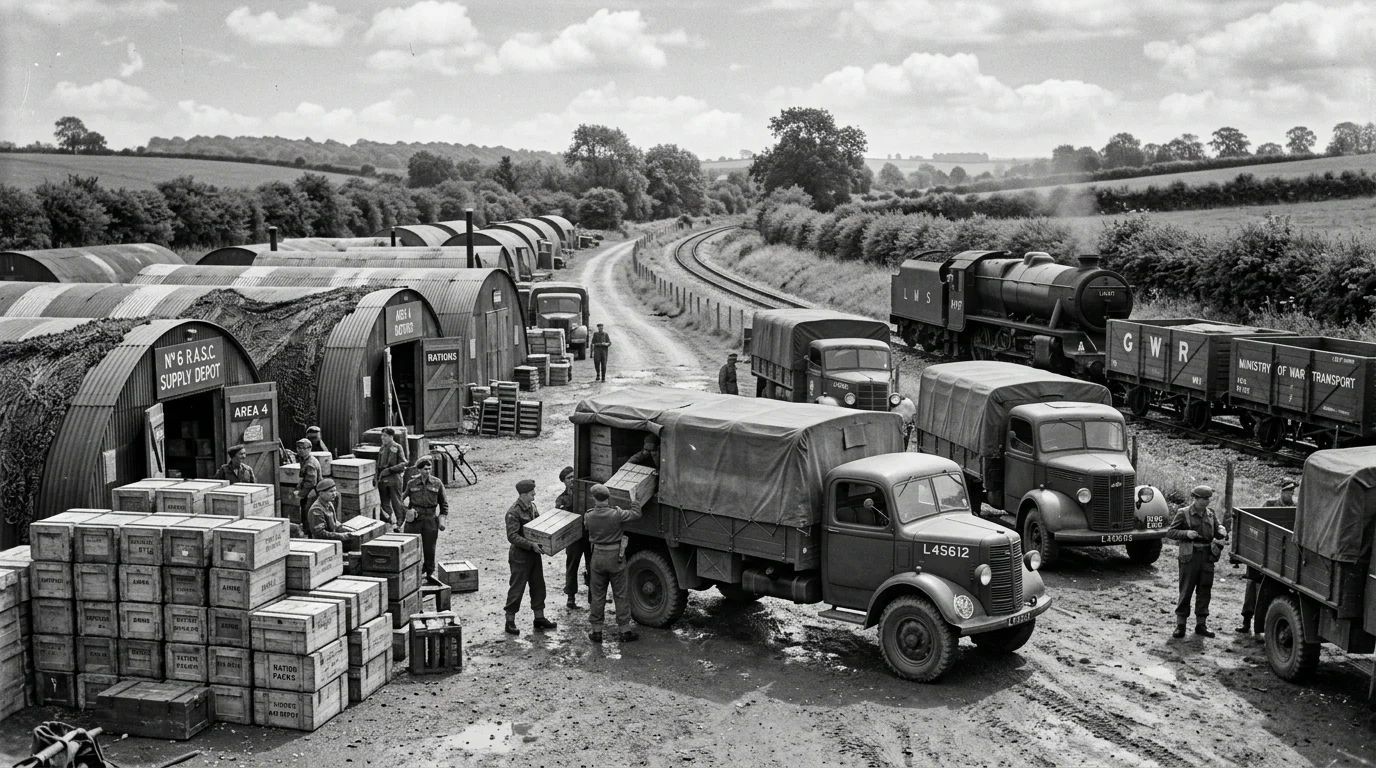
While aircraft filled the skies, groundbreaking military construction took place on the southern edge of town. In 1941, the War Office selected Graven Hill and Arncott for the Central Ordnance Depot, known locally as COD Bicester. Engineers laid dozens of miles of internal track for the Bicester Military Railway, connecting directly to main railway lines. Storage sheds, Nissen huts, and workshops rose rapidly across hundreds of acres of countryside.
At its operational peak in 1944, COD Bicester employed over 24,000 military personnel and civilian workers. The depot functioned as the master logistics storehouse for Allied armies preparing for Normandy landings on D-Day. Thousands of military vehicles, weapon systems, medical kits, and uniforms passed through Bicester yards before shipment to southern ports. Today, that vast military logistics site forms the basis of our modern Graven Hill community guide, where pioneering housing developments sit alongside military heritage.
How Did Bicester Residents Experience the Home Front and Rationing?
Wartime Bicester required extraordinary civilian dedication to sustain daily life under strict regulations. Air Raid Precautions wardens patrolled streets every evening to enforce total blackout rules across Market Square and residential roads. Street lamps remained unlit, car headlights wore slotted covers, and homeowners pinned heavy dark curtains across windows. Local volunteers manned observation posts atop church towers and water storage units to watch for enemy aircraft heading towards the Midlands.
Rationing affected every household from January 1940 onwards. Families cultivated fruit and vegetables on domestic garden plots and public allotments near Pingle Field. The local Dig for Victory campaign turned unused green spaces into potato patches and cabbage beds. Housewives converted kitchen scraps into livestock feed for community pig clubs managed by local tradesmen. Despite shortages of butter, meat, and sugar, community spirit remained exceptionally strong throughout the town.
Civic gatherings took place regularly inside Garth House, which hosted fundraising committees and Red Cross working groups. You can discover how this 19th-century estate served the community in our feature on Garth House estate history. Bicester residents raised thousands of pounds during War Weapons Week and Wings for Victory campaigns, funding equipment for front-line forces. Meanwhile, local bakeries such as Nash’s Bakery adapted traditional recipes to bake loaves using National Flour, supplying fresh bread to wartime households and military messes alike.
Nearby villages also accommodated specialized wartime facilities. At Blackthorn, two miles east of Bicester, Camp 268 housed Italian and German prisoners of war. Selected prisoners worked on local agricultural farms and helped construct drainage ditches alongside Oxfordshire farmhands. Former guards and prisoners noted that relationships remained respectful, with dozens of workers sharing midday tea rations in farm barns.
What Visible WWII Landmarks Can You Still Visit in Bicester Today?
Although eight decades have passed since the end of hostilities, physical remnants of wartime Bicester remain accessible throughout the parish. You do not need specialist equipment to spot historic structures while walking around town.
First, the airfield off Buckingham Road offers an unparalleled view of 1930s military layout. Grade II listed brick hangars, watch towers, and bomb stores remain in outstanding condition. The site now operates as Bicester Motion, holding regular public open days where you can inspect preserved buildings alongside classic motorcars.
Second, the grounds surrounding St Edburg’s Church retain subtle wartime markers. Churchwardens used stone crypts for protective storage, while the parish roll of honour inside the nave records local servicemen who lost their lives. To learn more about the ancient origins of this parish building, browse our guide to the ancient history of Bicester or our dedicated guide to St Edburg’s Church.
Third, Market Square still features commercial buildings that hosted wartime meeting points, British Restaurants, and civil defence offices. Reading our historic Market Square walking guide helps you visualize how troops and civilians gathered in the town centre for victory celebrations in May 1945.
| Landmark | Location | Modern Access & Tips |
|---|---|---|
| Bicester Airfield Perimeter | Buckingham Road (OX27 8AL) | Viewable from public footpaths; open on Scramble event days |
| Graven Hill Railway Depot Footprint | Rodney House buffer zone | Footpaths cross former military rail embankments |
| Crockwell School Building | East Street, Bicester | Historic Victorian brick school exterior visible from road |
| St Edburg’s Parish Church | Church Street (OX26 6AR) | Open daily for reflection; site of the Remembrance Sunday in Bicester war memorial viewing |
| Garth Park & Gardens | Launton Road (OX26 6PS) | Public parkland with historic council offices and tearoom |
Wartime Bicester Heritage Exploration Playbook
If you want to discover local wartime history firsthand, follow these tailored recommendations based on your schedule:
- If you are exploring on foot with a stroller or wheelchair: Walk through Garth Park off Launton Road before heading into Market Square. The paved footpaths are entirely flat, accessible, and pass historic civic sites used for wartime community meetings.
- If you are interested in military architecture and aviation history: Head to Buckingham Road and walk the public boundary trail around Bicester Motion. You will see authentic 1930s hangars and watch towers that accommodated No. 13 Operational Training Unit.
- If you want to see how wartime logistics shaped modern housing: Visit Graven Hill on the southern edge of town. You can walk along paved avenues where military supply tracks once moved D-Day equipment to the front line.
- If you are researching family history or local evacuees: Visit the local history section inside Bicester Library at Franklins House. Archival files and maps produced by the Bicester Local History Society record billeting records and parish rolls.
Discovering the Living Legacy of Bicester WW2 History
The remarkable story of Bicester WW2 history highlights how local heroism and strategic logistics transformed a small Oxfordshire market town into a cornerstone of Allied victory. To read more about the individuals who shaped the town across all historical eras, see our guide to famous people from Bicester.
For your next local heritage walk, explore our guide to Alchester Roman town to discover how military fortifications shaped Bicester two thousand years ago.