
Notable People from Bicester Through the Centuries
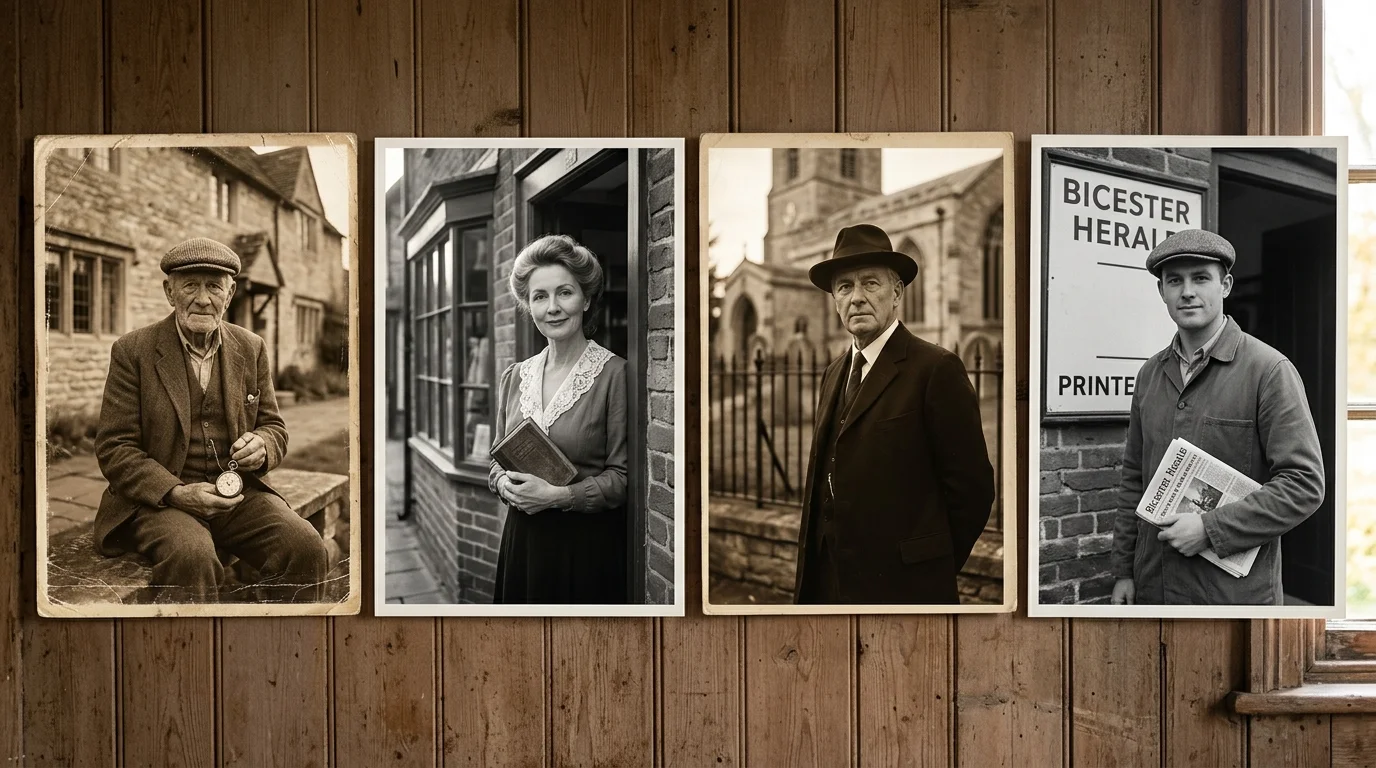
When you walk down Sheep Street on a crisp Tuesday morning, you tread the exact stone pathways shaped by centuries of remarkable figures. From Saxon saints who established religious foundations to Victorian doctors who altered global medicine, Bicester has fostered individuals who influenced national history. You might recognise Market Square for its modern stalls, yet the town center served as the home ground for pioneering artists, military strategists, and literary figures. Uncovering these historical connections gives you a fresh perspective on your daily walk through Oxfordshire. Exploring the achievements of famous people from Bicester reveals how a modest market town shaped wider historical events.
TL;DR
- Discover the extraordinary lives of famous people from Bicester spanning over thirteen centuries of history.
- Local historical figures directly created the landmarks, streets, and civic institutions you use every single day.
- Highlighted figures include Saxon saints, 19th-century medical pioneers, aviation legends, and modern television personalities.
- Learn exact physical locations in town where you can visit monuments, historic houses, and visible heritage features.
- Plan a weekend walking tour using our practical location guide to experience local history firsthand.
Who Were the Early Saxon Saints and Medieval Founders of Bicester?
The story of Bicester begins with religious devotion and noble patronage during the Anglo-Saxon and early Norman eras. Saint Edburg (Eadburh) of Bicester remains the most prominent early figure connected to the settlement. Born in the 7th century as a daughter of King Penda of Mercia, Saint Edburg led a life dedicated to Christian service as a nun and abbess. Her spiritual influence anchored the community, leading to the dedication of the parish church in her honour. When you visit our St Edburg’s Church guide, you stand within the oldest standing structure in town, which retains original medieval masonry. You can still see Saxon herring-bone stonework preserved high on the north wall of the nave.
In 1182, the Norman baron Gilbert Basset, Lord of the Manor of Bicester, transformed the religious landscape by founding Bicester Priory. He dedicated the Augustinian house to Saint Mary and Saint Edburg, providing land south of the town centre. In 1182, religious leaders translated the sacred relics of Saint Edburg to the priory church, attracting medieval pilgrims from across southern England. Henry de Lacy, 3rd Earl of Lincoln, expanded the priory during the 13th century, constructing an elaborate marble shrine for the saint. Although King Henry VIII ordered the dissolution of the monastery in 1536, archaeological excavations at the Bicester Priory archaeological site confirmed the vast scale of their stone precinct near Old Priory Mews.
The medieval period also generated legendary local folklore centered around Market Square. During the 18th century, a popular character named James Jagger gained fame across Oxfordshire as a local cunning man. Town accounts from the 1700s record how residents consulted Jagger to recover missing livestock and identify market thieves. While municipal clerks viewed his claims with skepticism, local traders valued his presence during Friday trading days. His colorful stories remained a staple of market town chatter for generations, illustrating the lively social culture of historic Market Square.
Which Victorian Pioneers from Bicester Changed Medical and Artistic History?
During the 19th century, Bicester produced individuals whose work achieved international recognition across medicine and fine art. Dr Albert Freeman Africanus King, born in the nearby parish of Ambrosden in 1841, spent his early childhood in the local area before emigrating to the United States. Dr King became a distinguished professor of obstetrics in Washington D.C. and entered world history on 14 April 1865. He was one of the first attending physicians to reach President Abraham Lincoln at Ford’s Theatre, assisting in emergency care throughout the night. In 1882, Dr King published a groundbreaking scientific paper proposing that mosquitoes transmitted malaria, decades before laboratory experiments confirmed his theory.
Fine art history also holds a direct connection to 19th-century Bicester through the life of Maud Franklin. Born in Bicester in 1857, Franklin moved to London as a young woman and became the principal model and artistic muse for American painter James McNeill Whistler. She posed for famous portraits, including Arrangement in White and Black, and developed into an accomplished painter in her own right. Exhibiting her canvas works at the Society of British Artists under the pseudonym Clifton Lin, Franklin earned respect within London gallery circles. Her creative career demonstrated how Bicester native talent contributed to the late 1890s Aesthetic Movement.
Civic infrastructure in Bicester developed under the guidance of local solicitor Richard Phillips during the Victorian era. In the 1840s, Phillips commissioned the construction of Garth House, an elegant gothic estate set within private grounds off Launton Road. Built using local Oxfordshire limestone, the estate served as a prominent private residence before becoming civic property. Today, you can visit Garth Park to admire the historic mansion, which houses the Bicester Town Council offices. Reading our guide to Garth House history offers complete details on how Phillips helped establish the parkland grounds you enjoy today.
How Did Aviation Leaders and Wartime Figures at RAF Bicester Shape National Defence?
Military aviation history forms a core component of local heritage, centered on the strategic airfield established at RAF Bicester. During the late 1930s, the airfield served as a primary testing location for military aviation technology. Sir Frank Whittle, inventor of the turbojet engine, conducted critical early research and engine tests at the base. Flight trials at RAF Bicester between 1937 and 1939 helped validate jet propulsion concepts that transformed global aviation. The airfield infrastructure built during this period remains remarkably intact today at Bicester Motion, preserving Britain’s most complete bomber station layout.
Wartime commanders stationed in town played vital roles during national defense operations. Air Vice-Marshal Sir Ralph Cochrane commanded RAF 3 Group from headquarters near Bicester, overseeing precision bombing missions during the Second World War. Under his direction, local squadrons prepared for operations that altered the course of European conflict. In our detailed study of RAF Bicester military airfield history, you can explore how aircrews trained on Bristol Blenheim bombers across the perimeter tracks. Furthermore, examining Bicester during World War Two shows how home front volunteers supported service personnel stationed along Buckingham Road.
Literary history also intersects with local military and rural life through the writings of Flora Thompson. Author of the classic trilogy Lark Rise to Candleford, Thompson lived in nearby Cottisford and Fringford between 1891 and 1900. She regularly walked into Bicester town center to visit market stalls and post letters at the high street office. Her vivid descriptions of Victorian market days capture the precise atmosphere of Sheep Street during the late 19th century. When you read her memoirs, you see Bicester through the eyes of a young writer documenting rural Oxfordshire traditions.
Who Are the Contemporary Champions and Television Personalities Connected to Bicester?
Modern Bicester continues to nurture individuals who achieve prominence in national broadcasting, sport, and business. Television presenter and antiques expert Charlie Ross established a strong local presence through his work on Market Square. For over twenty-five years, Ross operated an auction house in town, conducting regular sales that attracted collectors from across the home counties. His energetic auctioneering style led to frequent appearances on BBC television programmes including Bargain Hunt, Flog It!, and Antiques Road Trip. His broadcast career brought national attention to local antiques trade traditions on Market Square.
In professional sport, defender Sam Long represents modern Bicester talent on the football pitch. Born in Bicester in 1995, Long attended local schools and played youth football on community pitches across town. He joined the academy system at Oxford United, making his senior debut in 2013 and progressing to complete over two hundred first-team appearances. As a key player in Oxford United’s 2024 promotion campaign to the EFL Championship, Long frequently speaks about his local roots in town. His career inspires young athletes training at Whitelands Farm Sports Ground and Pingle Field.
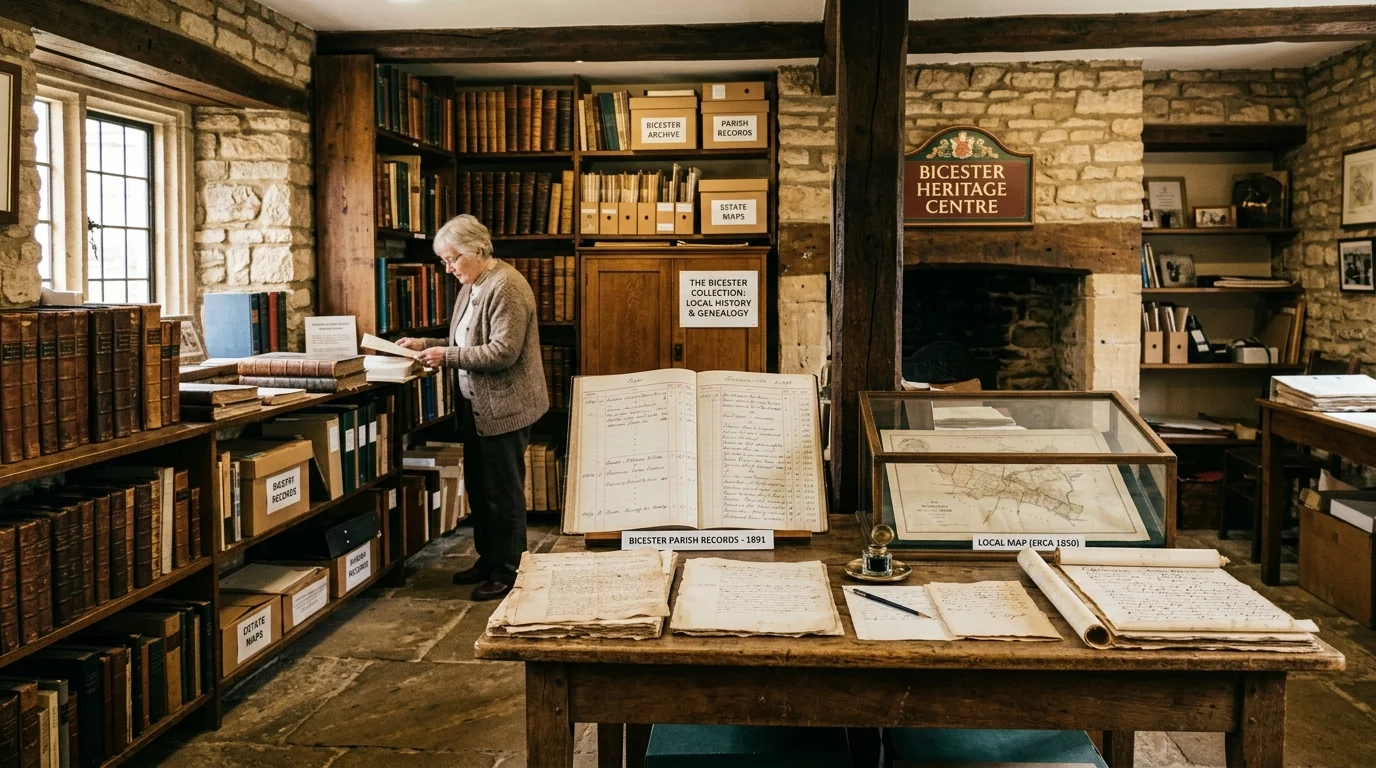
Community champions also maintain the town’s historical heritage through dedicated preservation groups. Members of the Bicester Local History Society have researched, archived, and published local historical records since 1964. Their efforts ensured that historic buildings along Sheep Street, Market Square, and London Road received formal protection. Reviewing the comprehensive history of Bicester shows how local volunteers continue to preserve archival photographs and documents for future generations.
Local Heritage Playbook: How to Explore Bicester’s Famous History
If you want to experience the locations associated with these notable figures, follow our targeted heritage playbook below:
| Exploration Focus | Recommended Local Route | Key Landmark to View |
|---|---|---|
| Saxon and Medieval Roots | Walk from Church Street to Priory Lane | St Edburg’s Church herring-bone masonry and Priory boundary walls |
| Victorian Medical & Civic History | Start at Market Square, walk to Launton Road | Garth House in Garth Park and historic Sheep Street facades |
| Aviation & Wartime Military History | Travel north along Buckingham Road to A4421 | Grade II* listed hangars and airfield perimeter at Bicester Motion |
| Modern Broadcast & Sporting Heritage | Walk along Market Square and Sheep Street | Historic auction rooms site and Sheep Street walking guide |
- If you are exploring Saxon and medieval history: Visit Church Street to inspect the Saxon stonework inside St Edburg’s Church, then stroll down to Old Priory Mews to view the surviving boundary lines of the 1182 Augustinian precinct.
- If you want to view Victorian civic legacy: Walk into Garth Park off Launton Road to view Garth House, built by Richard Phillips in the 1840s, before visiting Market Square where Dr Albert King’s family traded.
- If you are interested in aviation history: Book a guided tour at Bicester Motion along Buckingham Road to see the hangar bays where Sir Frank Whittle tested early jet engine concepts.
- If you follow modern local sports and culture: Visit Sheep Street on Friday market morning to experience the town atmosphere described by Flora Thompson and enjoyed by auctioneer Charlie Ross.
Where Can You Discover More Famous People from Bicester Today?
Exploring the stories of famous people from Bicester reveals how local residents across every century contributed to national heritage, medical progress, and cultural life. You can continue your journey through local history by reading our Bicester Heritage Trail walking route to discover marked historical plaques positioned across the town centre.