
Bure Park Nature Reserve: A Quiet Green Corner
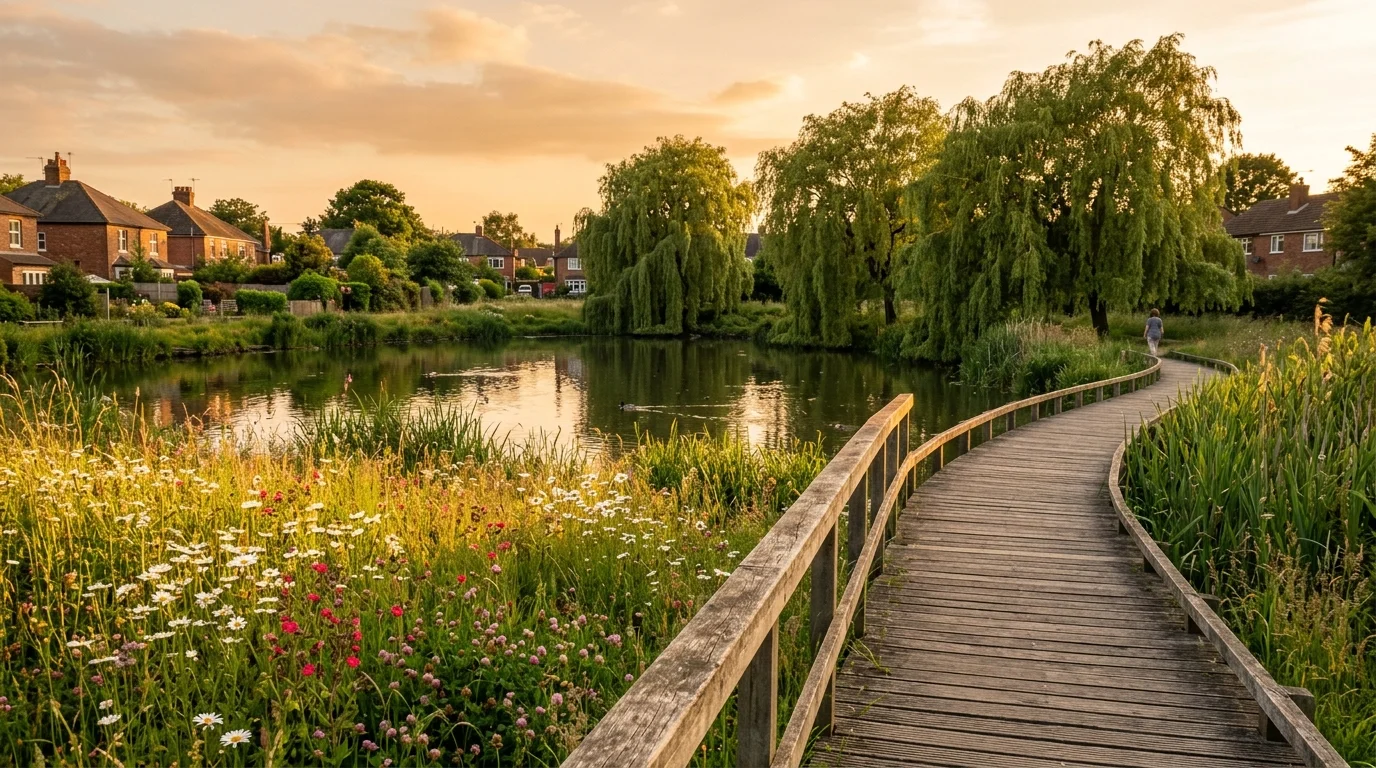
Stepping off Lucerne Avenue on a crisp Saturday morning, the suburban hum of northern Bicester fades into the gentle murmur of flowing water and birdsong. You cross a sturdy timber footbridge over the River Bure as sunlight filters through mature willow branches onto balancing ponds. For local families, dog owners, and daily commuters heading towards Bicester North railway station, Bure Park nature reserve offers a welcome sanctuary right on their doorstep. Designated as a Local Nature Reserve in 2005 across 8.4 hectares of floodplain meadow and wetland, this tranquil space preserves vital habitats amidst residential neighbourhoods. Whether you want a quick twenty-minute circuit or a peaceful morning spot to watch kingfishers dart across open water, this green corridor remains one of the town’s finest community assets.
TL;DR: Visiting Bure Park Nature Reserve
- What this post covers: A complete local guide to Bure Park nature reserve, exploring its wetland habitats, seasonal wildlife, accessible walking trails, and volunteer conservation days.
- Why it matters to Bicester residents now: As North Oxfordshire expands, preserving accessible urban nature spaces gives residents immediate connection to natural green havens within walking distance of home.
- The key highlight or finding: The reserve supports protected breeding colonies of Great Crested Newts alongside native watercourses that provide crucial flood alleviation and biodiversity benefits.
- What practical information you will get: Exact postcodes for free parking, trail accessibility notes for prams and wheelchairs, local wildlife spotter guides, and contact details for community volunteering.
- A single immediate action you can take: Pack binoculars for a morning stroll along the River Bure trail or join the Bicester Green Gym conservation team on their next monthly reserve session.
What Wildlife and Habitats Can You Discover at Bure Park Nature Reserve?
Bure Park Local Nature Reserve protects 8.4 hectares (approximately 21 acres) of diverse floodplain ecosystems in the north-western sector of town. Created in 1997 during the residential construction of the Bure Park neighbourhood and formally designated as a Local Nature Reserve in 2005, the site balances natural habitat preservation with flood management for North Bicester. The River Bure, a gentle limestone stream, meanders through the length of the park, feeding a network of shallow balancing ponds, balancing lagoons, and seasonal swales. These interconnected water features regulate surface run-off during heavy rainfall while creating a thriving wetland corridor.
The variety of micro-habitats across the site supports an exceptional range of Bure Park wildlife throughout the year. The balancing ponds are particularly famous for hosting viable populations of Great Crested Newts (Triturus cristatus), a strictly protected European protected species, alongside smooth newts, common frogs, and toads. Dense reedbeds and bankside alder groves shelter nesting waterfowl, including moorhens, mallards, and little grebes. Patient birdwatchers positioned near the central balancing pond regularly spot electric-blue kingfishers hunting sticklebacks, while grey herons stand motionless among the reeds at dawn.
Surrounding the wetland zones, unimproved neutral grassland and seasonal wildflower meadows burst into flower between May and August. You will find native flora such as yellow rattle, meadow cranesbill, lady’s bedstraw, oxeye daisies, and cowslips. These nectar sources attract distinct butterfly species, including marbled whites, meadow browns, gatekeepers, and common blues. During warm summer evenings, large emperor dragonflies and banded demoiselles patrol the water margins, followed by soprano pipistrelle and noctule bats foraging along the tree canopy.
| Habitat Zone | Characteristic Vegetation | Key Wildlife Species to Spot | Best Viewing Season |
|---|---|---|---|
| Balancing Ponds & Swales | Common reeds, yellow flag iris, water mint | Great Crested Newts, common frogs, damselflies | Spring and Summer |
| River Bure Corridor | Crack willow, alder, bankside grasses | Kingfishers, grey herons, moorhens, sticklebacks | Year-round |
| Wildflower Meadows | Yellow rattle, oxeye daisy, meadow cranesbill | Marbled white butterflies, bumblebees, grasshoppers | Late Spring to Late Summer |
| Woodland & Copse | Pedunculate oak, ash, hazel, field maple | Great spotted woodpeckers, song thrushes, bats | Autumn and Winter |
| Native Hedgerows | Hawthorn, blackthorn, elder, dog rose | Yellowhammers, bullfinches, hedgehog foraging routes | Autumn (foraging berries) |
Understanding these seasonal changes helps visitors appreciate the ecological role of this nature reserve Bicester asset. The combination of standing open water, running streams, scrub margins, and uncut meadow strips allows creatures to feed, shelter, and breed without human disturbance. Cherwell District Council and Bicester Town Council manage mowing schedules carefully, leaving designated safety buffers around the newt ponds while keeping the central recreation lawns open for community use.
How Do Community Volunteers and Bicester Green Gym Care for the Grounds?
The ongoing health and accessibility of Bure Park nature reserve rely on dedicated civic partnership and voluntary community action. While Bicester Town Council owns the land and Cherwell District Council provides ecological oversight, local volunteers perform essential hands-on conservation throughout the seasons. The most active voluntary group on site is the Bicester Green Gym, an environmental volunteering initiative that brings town residents together for weekly outdoor habitat management.
Bicester Green Gym volunteers conduct structured conservation work parties on Tuesday mornings, meeting between 10:00am and 12:30pm. On their regular sessions at Bure Park, team members clear invasive scrub from reedbeds, lay traditional hedgerows along boundary lines, coppice willow stools, and maintain clear sightlines along gravel pathways. These physical tasks keep water channels flowing smoothly and prevent aggressive bramble from choking delicate wildflower glades.
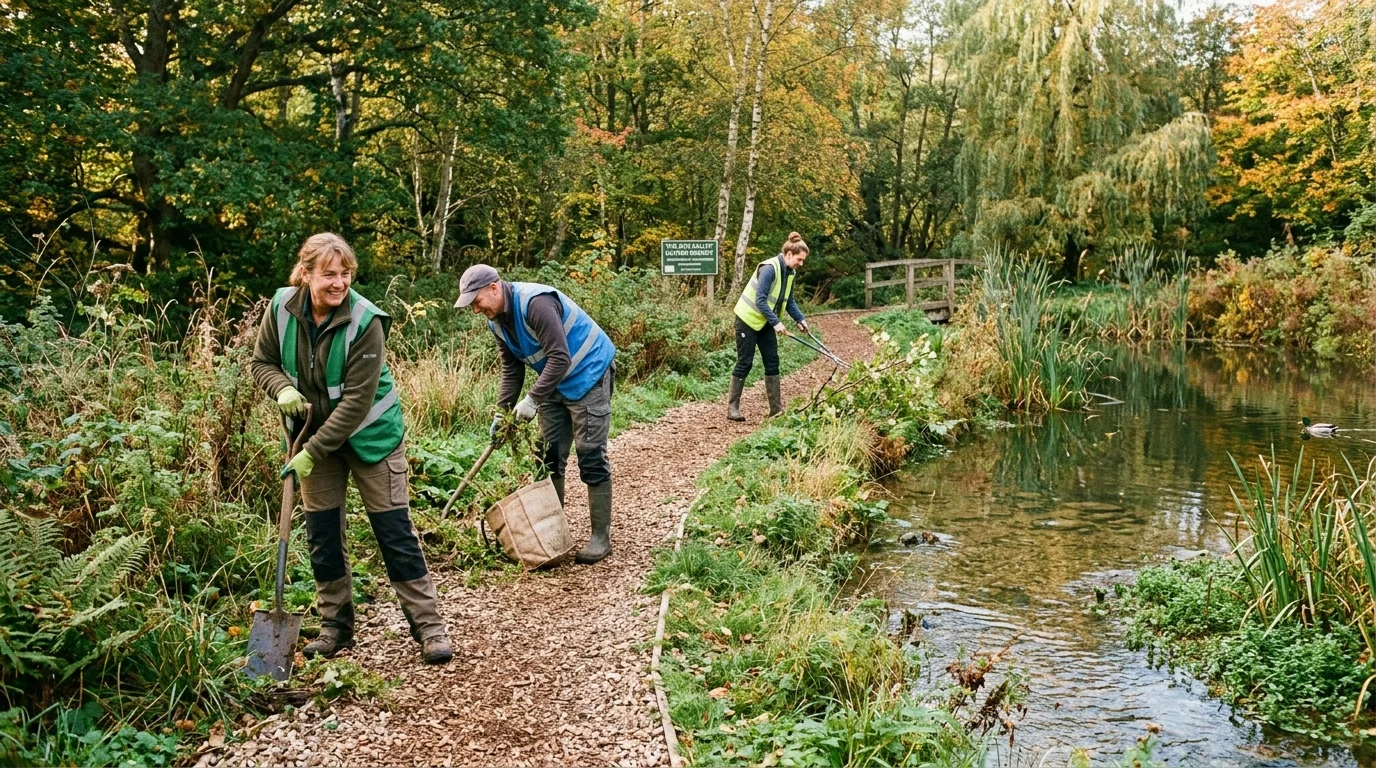
Bicester Green Gym volunteer leader Sarah Jenkins explains the reward of local conservation: “Working on the reserve gives everyone a direct connection to nature right in our own backyards. You do not need previous gardening experience or specialist tools. We provide gloves, equipment, and plenty of tea. Seeing kingfishers return to a pond we cleared by hand two weeks earlier is genuinely uplifting.”
In addition to adult conservation groups, Bure Park Primary School on Lucerne Avenue actively uses the reserve as an outdoor environmental classroom. School pupils take part in pond dipping, seasonal tree identification, and bird counts under teacher supervision. Educational interpretation boards situated near the main footbridges provide illustrated guides to freshwater invertebrates and pond life, turning every weekend family walk into an engaging learning adventure. If you want to lend a hand, you can join volunteer work days advertised on the Bicester Green Gym website or through community notices displayed in the Lucerne Avenue shopping parade.
Where Are the Best Walking Trails, Access Points, and Family Facilities?
Planning your visit to Bure Park nature reserve is straightforward thanks to its central location in the north-west residential sector. The primary visitor car park sits directly off Lucerne Avenue (postcode OX26 3HA), offering free vehicle parking adjacent to the local shopping parade. From the car park, a paved entrance leads directly into the northern boundary of the reserve within sixty seconds. Additional pedestrian entrances connect the reserve to Barberry Place, Bluebell Way, Shakespeare Drive, and the pedestrian greenways connecting with Elmsbrook sustainable village.
The park features a well-designed network of circular Bure Park walks suitable for visitors of all mobility levels. The main perimeter route extends approximately 1.8 kilometres (1.1 miles), following smooth, level tarmac paths and compacted gravel trails that loop around the River Bure and both balancing ponds. Timber footbridges cross the stream at three strategic locations, allowing walkers to shorten or extend their circuit according to their schedule. The paths remain accessible for double prams, wheelchairs, and mobility scooters throughout the year, even after heavy winter rain.
| Trail Route | Distance & Terrain | Recommended Users | Key Highlights on Route |
|---|---|---|---|
| Main Perimeter Loop | 1.8 km (1.1 miles), smooth tarmac & gravel | Prams, wheelchairs, daily walkers | Balancing pond views, mature willow canopy, river bridges |
| River Bure Waterside Path | 1.2 km (0.75 miles), compacted earth & timber bridges | Nature lovers, birdwatchers | Kingfisher perches, reedbeds, dragonfly pools |
| North Meadow Circuit | 0.8 km (0.5 miles), level grass & gravel | Families with toddlers, dog walkers | Wildflower meadows, butterfly corridors, quiet benches |
| Bicester North Station Link | 1.5 km (0.9 miles), paved urban greenway | Rail commuters, active cyclists | Direct traffic-free shortcut towards Buckingham Road |
For parents with young children, the reserve provides a tranquil contrast to busy urban play areas. While there is no playground equipment inside the protected conservation zone itself, the well-equipped Barberry Place children’s play area sits two minutes away on foot across Lucerne Avenue, as featured in our guide to the best playgrounds in Bicester. Families frequently combine duck watching along the River Bure with playground visits and a stop at the Lucerne Avenue Co-op store for refreshments.
The reserve also serves as a crucial green commuter link. Pedestrians and cyclists travelling between northern estates and Bicester North railway station use the paved perimeter avenue to bypass busy vehicle roads. If you enjoy longer walking itineraries, the reserve links directly into broader routes detailed in our guide to walking routes around Bicester and our comprehensive directory of parks and green spaces in Bicester.
Bure Park Nature Reserve Visitor Playbook: If/Then Scenarios
To help you get the most out of your time outdoors, use this practical scenario guide before setting off:
- If you are visiting with double prams or mobility equipment: Enter via the main Lucerne Avenue entrance (OX26 3HA). Stick to the wide tarmac perimeter paths and timber bridges, which offer step-free, level rolling conditions right around the central pond.
- If you are walking your dog: Keep dogs on short leads near the designated balancing ponds and breeding wetland areas to protect nesting waterfowl and sensitive newt habitats. Dispose of waste in the dedicated red bins located at every park gate. Find additional trails in our guide to dog walking routes in Bicester or pet-welcoming cafes in our dog friendly Bicester guide.
- If you are searching for wildlife and bird photography: Arrive between 7:00am and 9:00am on a weekday morning when footfall is light. Position yourself near the eastern willow copse along the River Bure to photograph kingfishers, herons, and damselflies in soft morning light.
- If you want to get involved with local volunteering: Check the Bicester Green Gym programme online and attend a Tuesday morning session from 10:00am. Wear sturdy boots and outdoor clothing; tools and refreshments are provided free of charge.
- If you want to combine your walk with local food or coffee: Stroll across to the Lucerne Avenue parade to visit The Dragon pub for lunch or pick up picnic supplies from the Co-op. For a full neighbourhood overview, read our comprehensive Bure Park and Highfield guide.
- If you are planning free family days out on a budget: Pair a wildlife spotting walk at Bure Park with a visit to Garth Park, or explore the wetland trails in our Langford Meadows and River Ray guide, both highlighted in our roundup of top free things to do in Bicester.
How to Protect and Enjoy Bure Park Nature Reserve
Bure Park nature reserve remains a shining example of how thoughtful town planning can preserve thriving wildlife habitats directly alongside settled residential neighbourhoods. When you plan your next morning walk or family outing, take time to appreciate the quiet beauty of the River Bure, and look out for upcoming community conservation dates to help keep this green sanctuary flourishing for generations to come.